

Ask four people what 'revenue' means.
By Zack Pemberton · · 3 min read
 By Zack Pemberton · · 3 min read
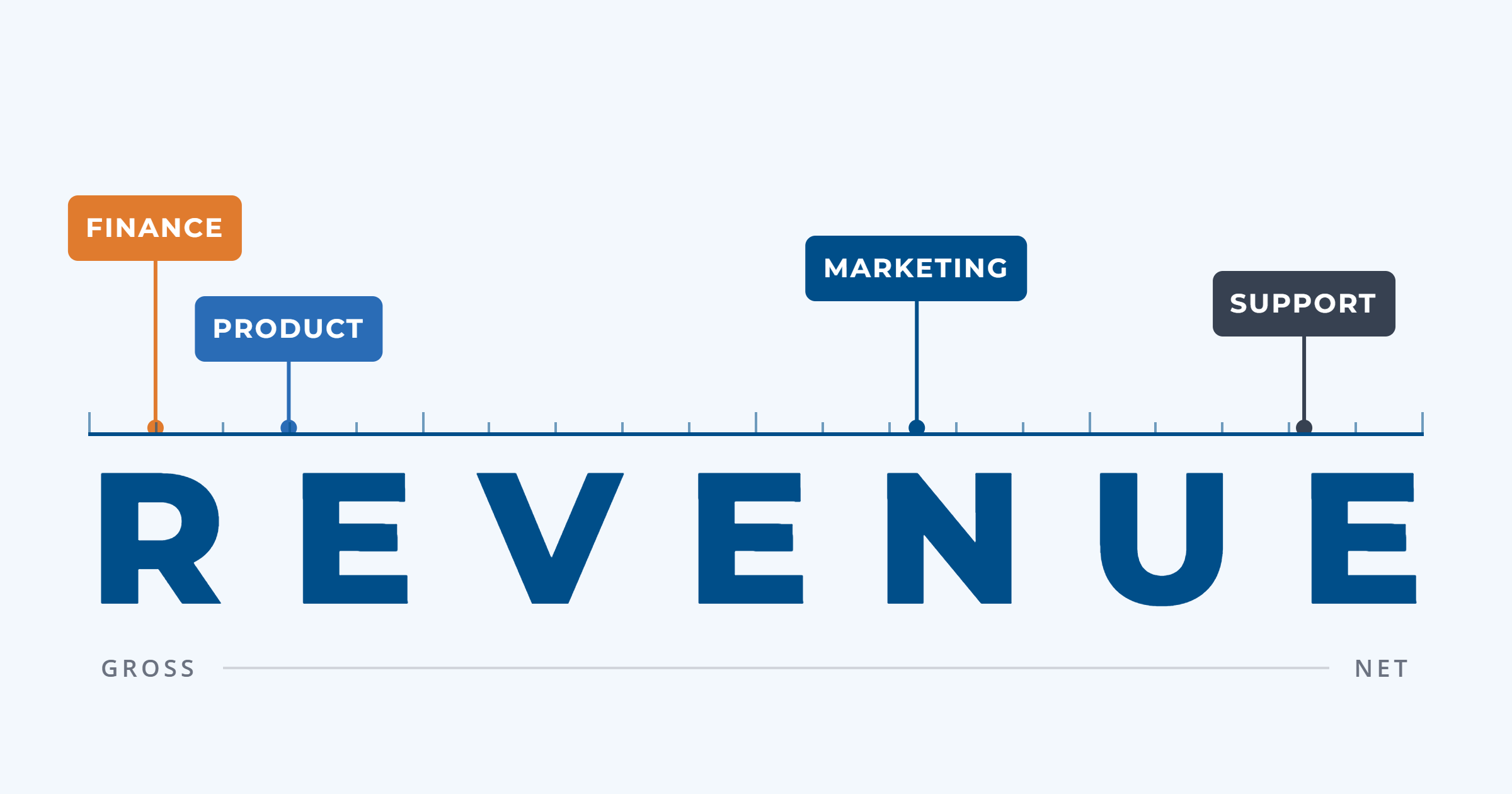
I've sat in rooms where four people give you four different answers for the same word: revenue.
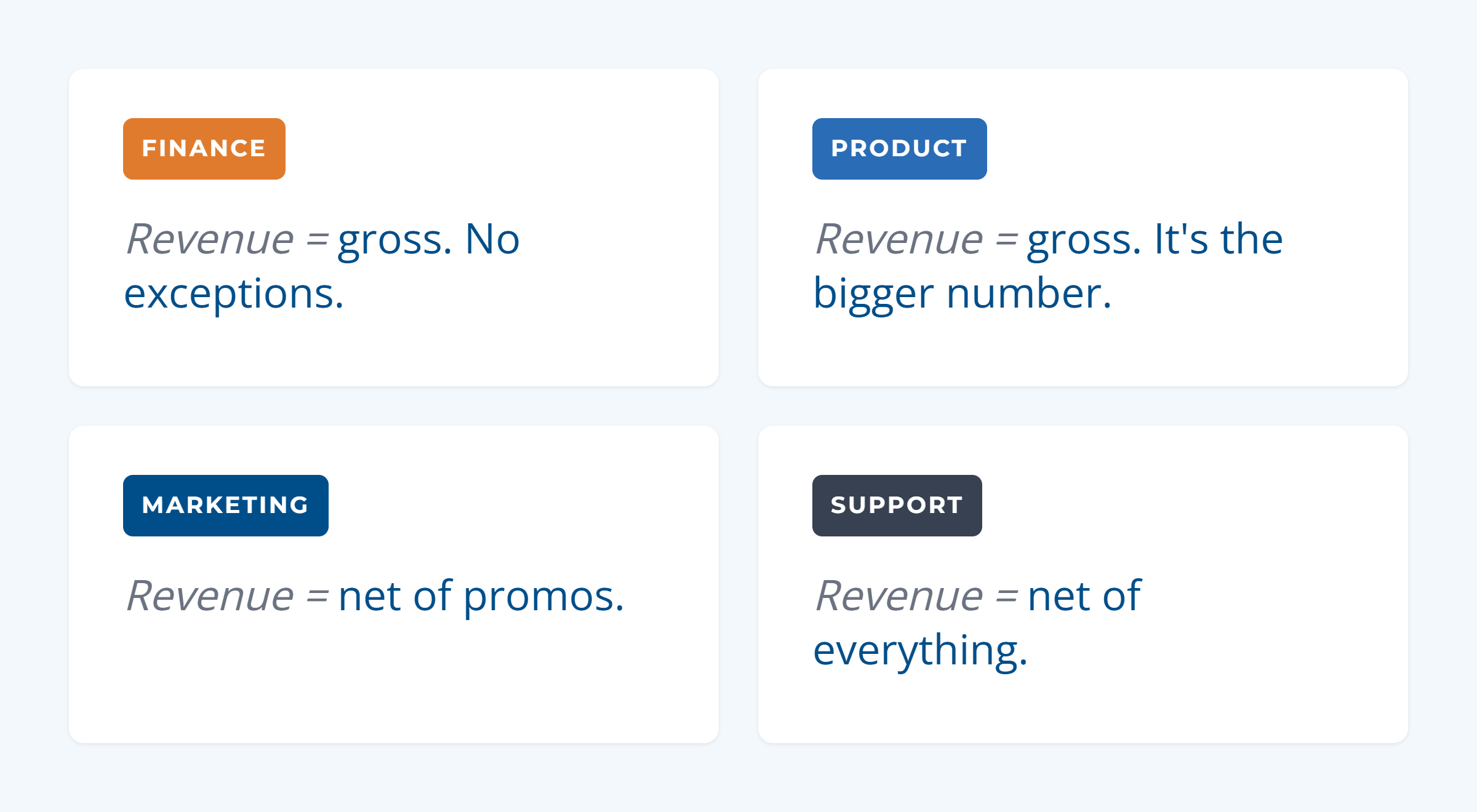
Finance is precise. Gross means gross, no ifs ands or buts. Product wants the bigger number, since product teams are basically salespeople for their own roadmap. Marketing treats a promo code as a cost, not revenue. Support only sees what's left once everything else gets paid.
Four teams, four honest reasons. Only three actual numbers between them. Nobody did anything wrong. The numbers still did not match.
A real example: a company was weighing a product change. Pull a feature out of the cheaper tier, move it into the pricier one. The logic was straightforward. Some short-term pain on the low end, made up for by more people paying full price on the high end over time.
One team modeled it using revenue only. Another team ran the same change. This time, delivery costs came out first.
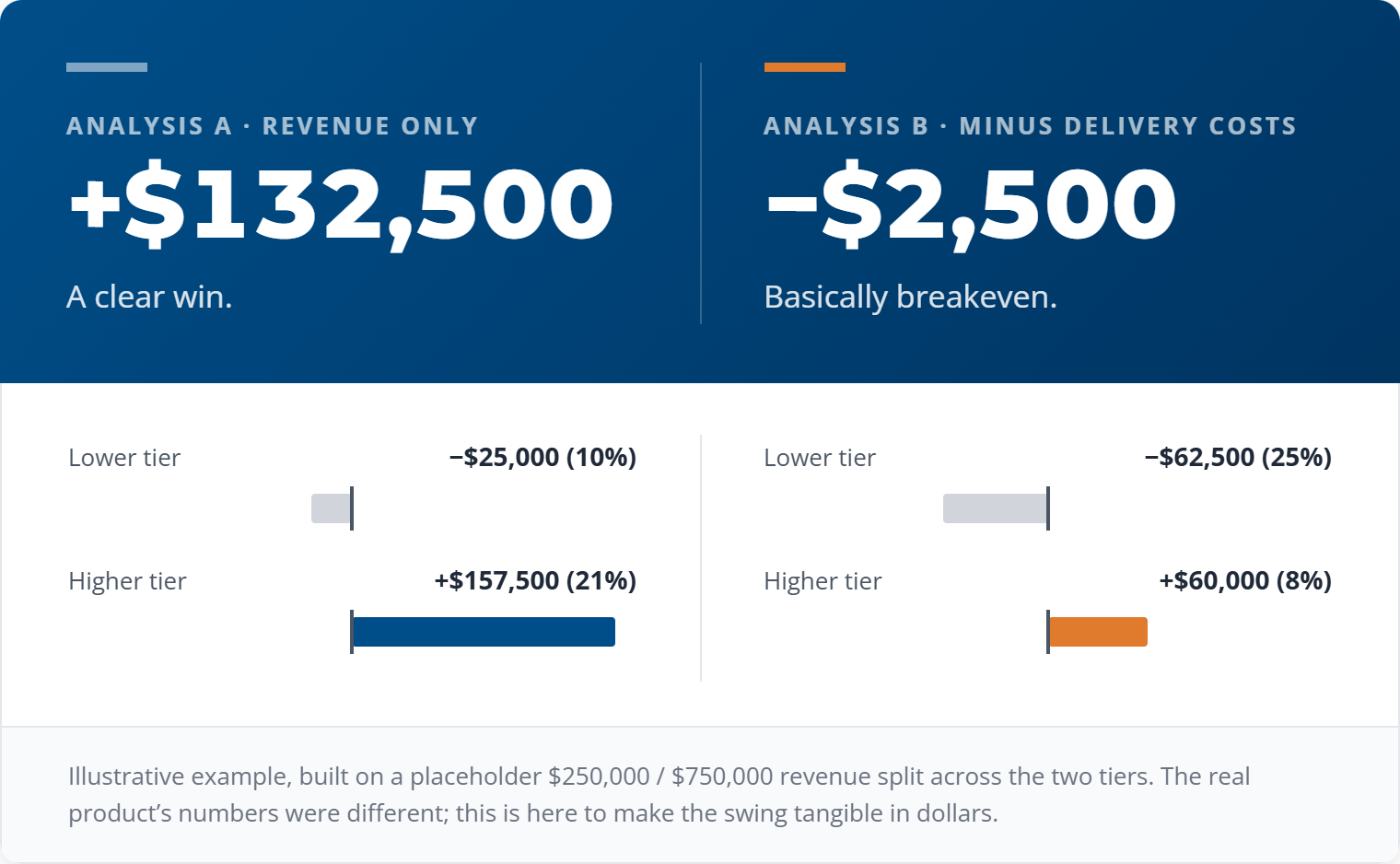
Nobody had cooked the numbers. Both analyses were honest work. They were just built on two different definitions of the word sitting at the top of the spreadsheet. The immediate cost was time. Leadership took a lot longer to decide than they should have needed to, going back and forth between two answers that each felt right. The bigger cost was the one that almost happened: a call that could have gone the wrong way. Not because anyone did bad analysis. Because nobody had agreed on what the word at the top of both spreadsheets actually meant.
Write the sentence
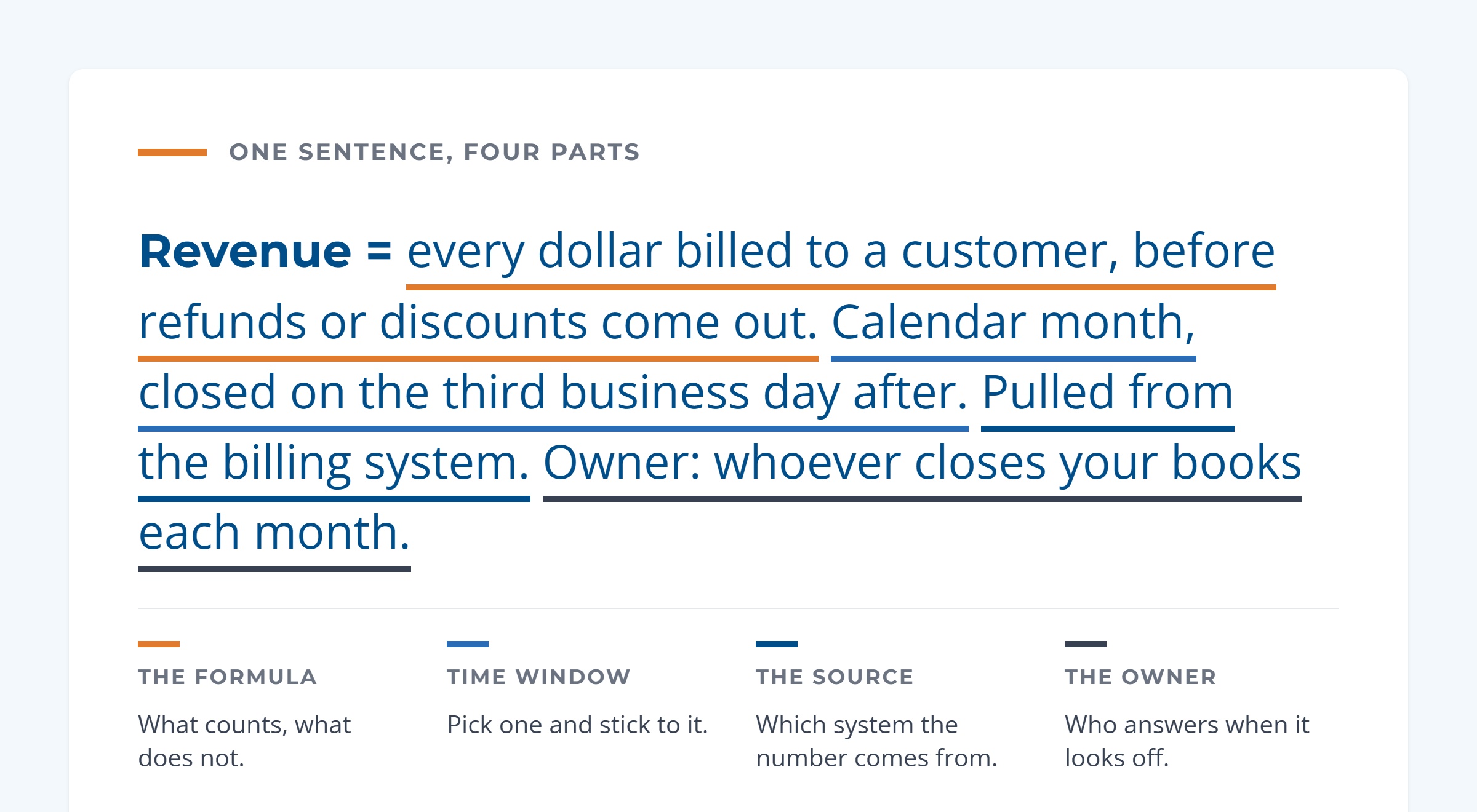
The fix is not a new system. It is one sentence, built in four steps.
- Write the formula. What counts, what does not. Example: "Revenue is every dollar billed to a customer, before refunds or discounts come out."
- Set the time window. The last 30 days? This fiscal year? Calendar month? Pick one and stick to it.
- Name the source. Which system does the number actually come from?
- Put a name on it. Someone whose job it is to answer when the number looks off.
Write it down somewhere more permanent than someone's memory: a pinned message, a cell at the top of the report, a line in the handbook. It does not need to be fancy. It needs to be findable.
Before you write yours, it helps to know how much trouble you are actually in. Two quick tests will tell you:
- Ask three people at your company to define your number, out loud, right now. More than one answer means you have a problem.
- Pull your last few reports that reference it. If the numbers do not match, you have a problem.
Either test comes back clean, you are already ahead of most companies. Either one comes back messy, that is worth fixing before the next report goes out.
That is the whole habit: one number, one sentence, written down somewhere everyone can find it. It will not fix your reporting by itself. But it means the next disagreement is about the business. Not about whose spreadsheet is right.
Tell me which number you picked. And how many different answers you got when you actually asked around.