

The moment a shared spreadsheet becomes a liability
By Zack Pemberton · · 3 min read
 By Zack Pemberton · · 3 min read
Every spreadsheet starts as one person's tool. They build it. They know every formula in it, and when something looks wrong, they know exactly which cell to check. That version is fine. It can even be pretty rough and still be fine, because there is one brain that understands the whole thing.
The trouble starts when that workbook stops being one person's. More people need numbers out of it, so more people get edit access. Now there are three or four sets of hands in the same file, sometimes on the same afternoon. Each one is confident they know what they are doing.
What actually breaks
It is rarely one dramatic mistake. The more common failure is quieter. Picture a workbook with several tabs, where one tab's formula pulls a number from another tab, which pulls from another. Somebody on one tab changes how a number is calculated, or adds a row that shifts everything below it. Every other tab that referenced that cell keeps on calculating. It does not throw an error. It just gives you a different, wrong answer, with total confidence.
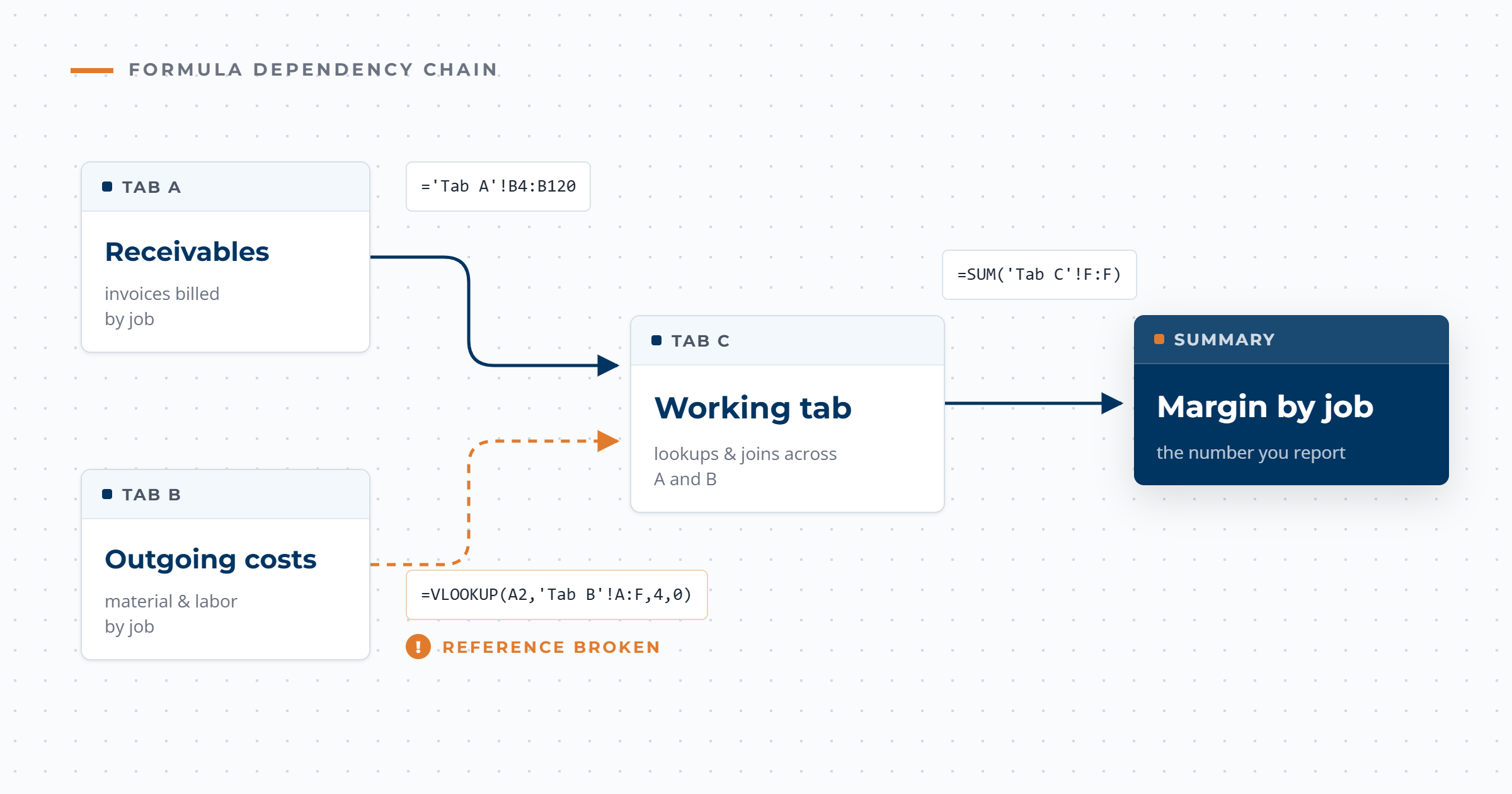
I have seen this play out the same way more times than I can count. A formula gets altered on one sheet. The person who touched it has no idea it feeds two or three other tabs, and the mistake keeps quietly compounding in the background. Nobody catches it because nothing looks broken. The workbook opens fine. The numbers are just wrong, and they stay wrong until somebody who understands the full formula chain happens to go looking.
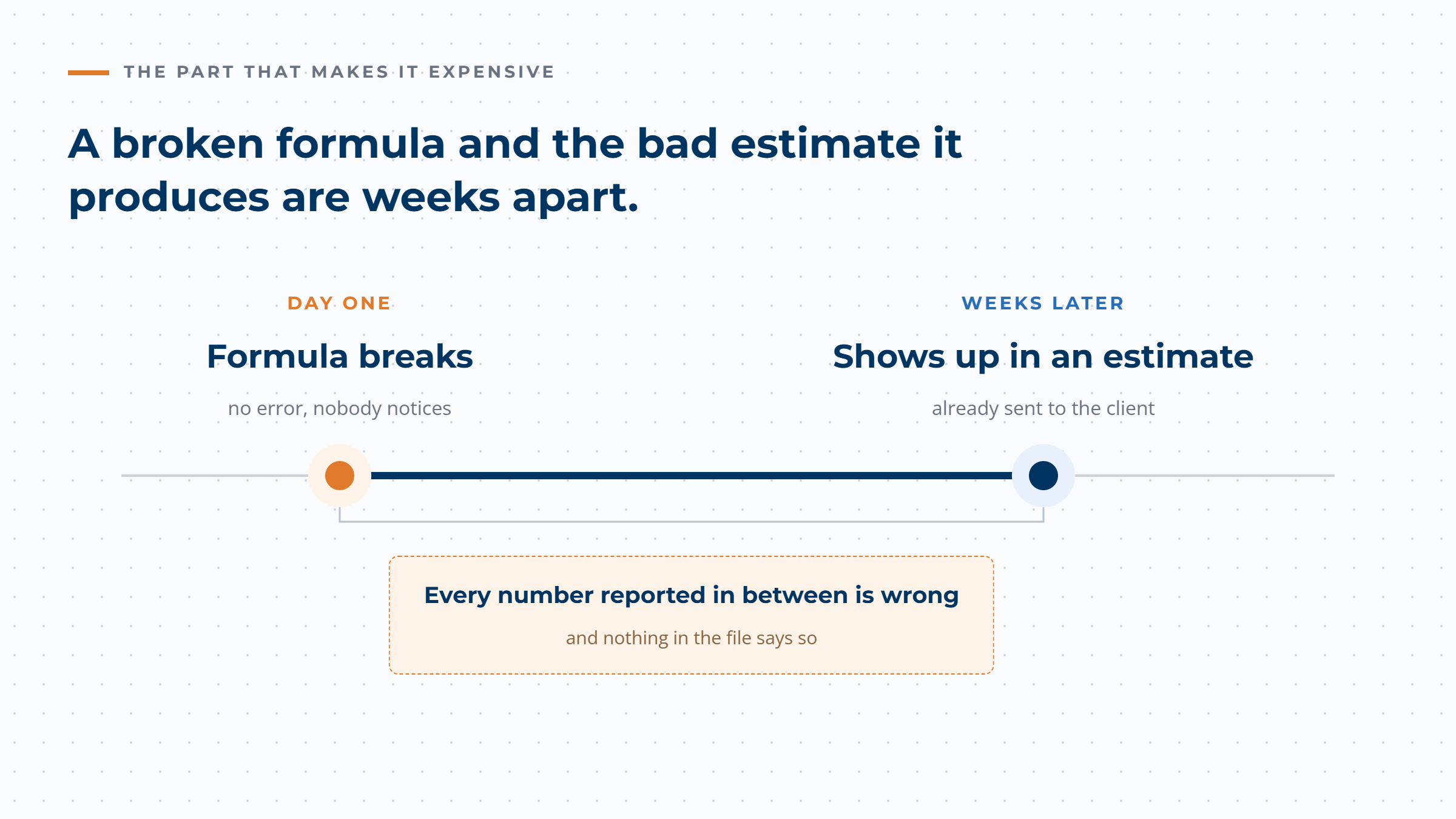
That is the part that makes this expensive instead of just annoying. A crashed file gets fixed that day. You cannot ignore a crash. A silently wrong formula gets used instead. It shows up in a report. The report shapes a decision. By the time anyone notices the number underneath it was never right, the decision has already been made. A bad number can sit on a future project's estimate, built off a reference that had been quietly broken for weeks. It does not announce itself as a spreadsheet problem. It just looks like the project ran over.
Two questions that tell you where you stand
How many people regularly edit this specific workbook, not just view it? Two is manageable. One person can hold three or four editors' worth of changes in their head. Once it is more than that, or the people editing it are not the person who understands how it was built, you lose the thing that made the fragile version safe. One set of eyes was watching the whole file, and now nobody is.
Does a number on one tab depend on a formula on a different tab that only one person actually understands? If yes, you have a single point of failure sitting inside a file that multiple people can change. Shared access plus a formula chain nobody fully owns is exactly the setup that produces the quiet, expensive kind of mistake.
Neither answer means panic. It means you know where the risk actually lives, instead of vaguely worrying about "the spreadsheet" as a whole.
None of this means the fix is walking away from spreadsheets. Usually the fix is smaller than people expect. One number everyone points to instead of five. One person or system that owns the calculation. Enough separation between the file where people work and the number the business runs on, so a single bad edit cannot quietly become everyone's problem. What that actually looks like depends on the business, which is the harder part to figure out alone.
So: how many hands are in your most important workbook right now, and could all of them explain what happens on the tab they don't usually open?